

Introduction
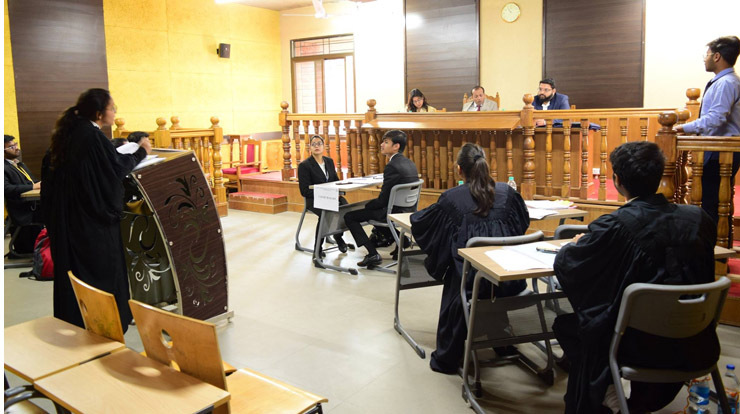
A moot court competition is a simulated court proceeding where law students argue imaginary cases for practice. These competitions allow participants to develop skills in legal research, drafting, and oral advocacy. Unlike actual court cases, moot courts focus on argumentation, reasoning, and persuasive presentation rather than real-life outcomes.
Importance of Moot Court in Legal Education
Participating in a moot court competition offers numerous benefits:
- Improves legal research and analytical skills.
- Enhances public speaking and courtroom confidence.
- Prepares students for real-life litigation scenarios.
- Provides networking opportunities with judges, lawyers, and peers.
Many law schools view moot court participation as a vital component of practical legal training. Winning or performing well in such competitions often strengthens resumes for internships and jobs.
Types of Moot Court Competitions
There are several types of moot court competitions, including:
- National Moot Court Competitions – Focused on domestic law and usually organized by bar associations.
- International Moot Court Competitions – Focus on international law, human rights, or arbitration.
- Specialized Moot Courts – Address niche areas like taxation, intellectual property, or environmental law.
| Type | Focus Area | Level |
|---|---|---|
| National | Domestic law | Local/National |
| International | Human rights, arbitration | Global |
| Specialized | IP, tax, environment | Varies |
Preparing for a Moot Court Competition
Understanding the Case Problem
The first step in any moot court competition is to carefully analyze the case problem. Identify:
- Facts that support your arguments.
- Legal issues involved.
- Possible counterarguments.
A clear understanding of the problem ensures that your arguments are relevant, persuasive, and well-structured.
Researching Legal Precedents
Thorough research is essential. Use:
- Law journals and case databases.
- Statutes and constitutional provisions.
- Previous judgments from higher courts.
Proper research strengthens your argument and provides credible references during oral submissions.
Structuring Your Arguments
In a moot court competition, structure matters. Follow this framework:
- Introduction – State your position clearly.
- Argument 1 – Main legal point with supporting evidence.
- Argument 2 – Secondary point with citations.
- Conclusion – Summarize and emphasize your stance.
| Argument Section | Key Tips |
|---|---|
| Introduction | Be concise, grab attention |
| Main Argument | Cite authority, remain logical |
| Counterpoints | Address opposing arguments |
| Conclusion | Strong summary, memorable |
Developing Advocacy Skills
Oral Advocacy Techniques
Mastering oral advocacy is crucial in a moot court competition. Tips include:
- Speak clearly and confidently.
- Maintain appropriate pace and tone.
- Make eye contact with judges and use gestures naturally.
Writing a Strong Memorial
A memorial is a written submission. Key points:
- Organize arguments logically.
- Use headings and subheadings for clarity.
- Cite all cases, statutes, and references correctly.
Mastering Courtroom Etiquette
Courtroom decorum is important:
- Dress professionally.
- Stand when addressing judges.
- Respect opposing counsel and judges.
Teamwork and Strategy
Assigning Roles in a Moot Court Team
Most teams consist of:
- Lead Oralist – Presents the main arguments.
- Co-Oralist – Supports and addresses counterarguments.
- Researcher – Conducts legal research and drafts memorials.
Effective Team Coordination
Regular meetings, mock sessions, and rehearsals enhance team performance. Team synergy ensures that arguments are cohesive and complementary.
Mock Sessions and Feedback
Conducting mock sessions simulates real competition scenarios. Invite peers or faculty to give feedback on:
- Argument clarity
- Legal accuracy
- Presentation skills
During the Competition
Presenting Arguments Confidently
In a moot court competition, confidence is as important as knowledge. Maintain composure, stick to your time limits, and use persuasive speech.
Handling Judges’ Questions
Judges often interrupt to test your understanding. Tips:
- Listen carefully.
- Answer respectfully and concisely.
- Admit if unsure rather than guessing incorrectly.
Time Management in Courtroom Presentations
Effective time management ensures all arguments are delivered clearly. Allocate time to each section and practice to stay within limits.
Post-Competition Tips
Learning from Feedback
Take judges’ feedback seriously. Evaluate:
- Strengths in argumentation.
- Areas needing improvement.
-
Communication and presentation style.
Networking Opportunities
Competitions allow participants to interact with professionals. Build connections for internships, mentorship, and career guidance.
Leveraging Experience for Career Growth
Highlight moot court experience in resumes and interviews. It showcases research, analytical thinking, and advocacy skills.
Common Challenges and How to Overcome Them
Stage Fright and Anxiety
Practice breathing techniques and mock presentations to overcome nervousness. Confidence grows with preparation.
Dealing with Complex Legal Issues
Focus on simplifying complex points. Use analogies or examples to explain intricate legal matters clearly.
Improving on Weak Areas
Self-assessment after each round helps identify weaknesses. Continuously work on research, writing, or oral advocacy skills.
Conclusion
Key Takeaways for Aspiring Moot Court Participants
- Understand the problem thoroughly.
- Research and cite legal authorities accurately.
- Practice oral arguments and memorial writing.
- Work effectively as a team.
- Handle judges’ questions with composure.
The Long-Term Benefits of Moot Court Experience
Participating in a moot court competition develops skills that are invaluable in legal practice, enhances employability, and boosts confidence in public speaking and legal reasoning.
Excel in moot court competitions with expert tips on preparation, oral advocacy, teamwork, and courtroom confidence.
Learn how to succeed in moot court competitions: research, draft memorials, present arguments, and ace judges’ questions.
Boost your legal skills and career with our ultimate guide to participating in a moot court competition successfully.
Read More:- Sources of International Law: Key Principles, Treaties, and Customs Explained
